The Indian electric vehicle (EV) landscape has transitioned from a niche tech experiment into a high-volume mainstream automotive segment. The market dynamics in mid-2026 show that consumer adoption is moving at a blistering pace.
Two massive milestones are currently defining this green revolution: Tata Motors officially breaching the elusive 10,000 monthly EV sales ceiling, and Maruti Suzuki aggressively scaling up its maiden electric flagship, the e Vitara.
Together, these structural milestones represent a structural shift that will permanently alter India’s roads. Let’s break down the data, the products, and the long-term trends shaping India’s electric future.
The EV Tipping Point: May 2026 Market Matrix
| Market Indicator | Tata Motors EV Ecosystem | Maruti Suzuki e Vitara Playbook |
| May 2026 Volumes | 10,517 units (Combined Domestic + Export) | Steady 6–8 week structural delivery backlog |
| YoY Volume Growth | Up 85% vs. May 2025 (5,685 units) | Ground-up launch momentum (Priced from ₹15.99 Lakh) |
| Dominant Models | Punch.ev, Nexon.ev, Tiago.ev | e Vitara (Delta, Zeta, and Alpha variants) |
| Battery Strategy | Gen-2 Acti.ev Dedicated Architecture | Heartect-e Platform (49 kWh & 61.1 kWh packs) |
1. The Tata Dominance: How the 10K Milestone Was Achieved
Tata Motors Passenger Vehicles Ltd has long held the pioneer advantage in India’s electric space, but May 2026 marked their most explosive validation yet. Clocking 10,517 electric car dispatches, Tata registered a massive 85% Year-on-Year volume growth.
Democratization Below the ₹15 Lakh Mark
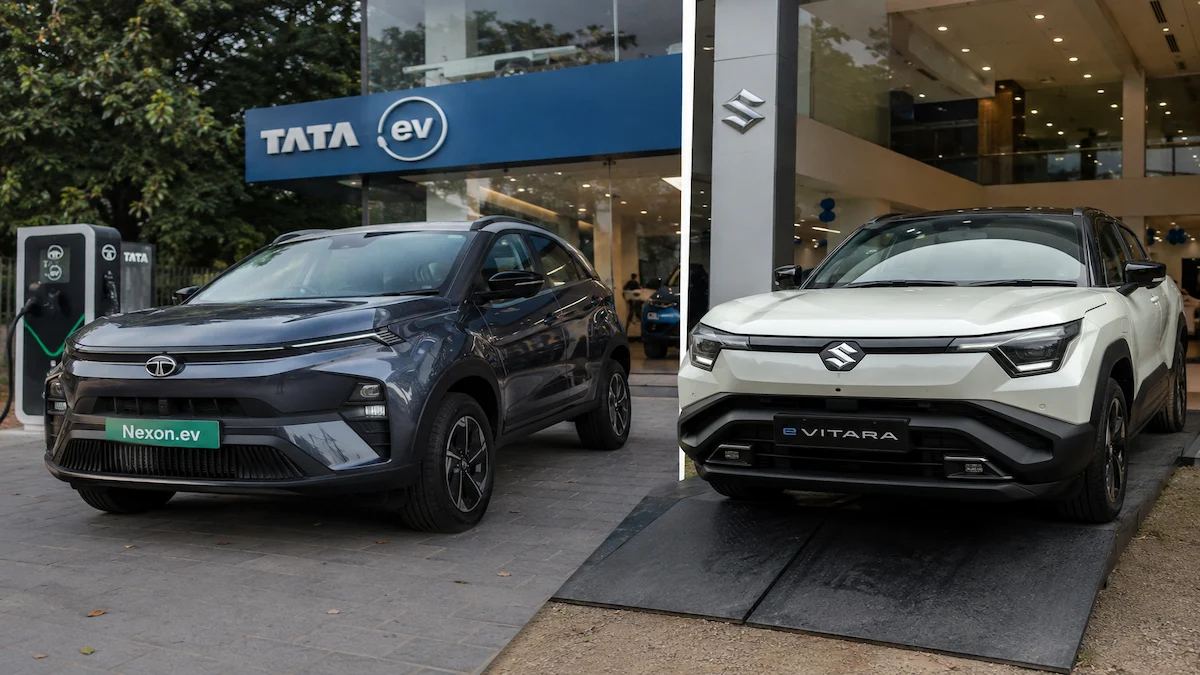
The exponential growth curve is being spearheaded by the Punch.ev and Nexon.ev nameplates. By offering robust multi-powertrain choices, Tata has captured the meat of the mid-tier Indian buyer market. Booking interest has surged 3.5 times compared to last year, proving that range anxiety is taking a backseat to pure total cost of ownership (TCO) benefits.
Beyond the Metro Cities
Crucially, official Vahan registration data proves that Tata’s EV growth is no longer confined to major tier-1 cities. The sales spread highlights deep geographic penetration:
- Maharashtra led the volume charts with 1,382 local registrations.
- Rajasthan emerged as a surprising runner-up with 1,302 registrations.
- Telangana and Kerala rounded out the top tiers, proving that state-level charging infrastructure expansions are directly unlocking rural and semi-urban EV demand.
2. Enter the Giant: Maruti Suzuki’s e Vitara Shifts the Scale
While Tata currently holds the volume crown, India’s largest carmaker isn’t sitting idly by. Following its commercial rollout on February 17, 2026, the Maruti Suzuki e Vitara has sent shockwaves through the premium electric compact SUV class.
Maruti Suzuki e Vitara: Structural Variant Stack
Delta (49 kWh) –> Aggressive Entry Pricing (Popular in Booking Volume)
Zeta (61.1 kWh) –> Balanced Range & Mid-Tier Luxury
Alpha (61.1 kWh) –> Premium Tech Pack & Optional AWD Capability
The Strategy Behind the e Vitara
Priced from ₹15.99 lakh (ex-showroom), the e Vitara bypasses the budget commuter space to strike directly at premium targets like the MG ZS EV and upcoming Hyundai Creta EV. Built on the brand’s dedicated Heartect-e scalable platform, it boasts real-world certified ranges climbing up to 543 km on its larger 61.1 kWh battery spec.
Demand and Supply Constancy
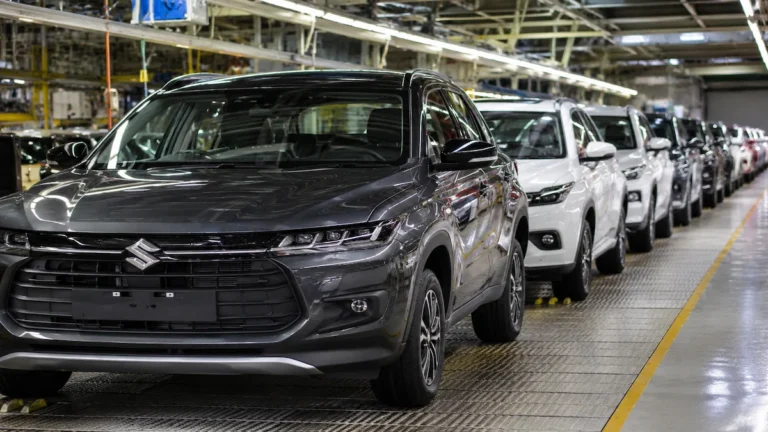
Dealer data from mid-2026 indicates a highly uniform 6 to 8 weeks waiting period across all variants. While initial customer booking volumes favor the entry-level Delta trim, production at Suzuki’s high-capacity Hansalpur facility in Gujarat is being optimized heavily. Because the Hansalpur plant is designated as a global export hub to ship the e Vitara to over 100 international markets, Maruti’s localized battery-assembly ecosystem is built to sustain massive scales that can eventually outpace component supply bottlenecks.
Carvoxa Analysis: What This Means For The Consumer
The aggressive wrestling match between Tata’s established volume portfolio and Maruti’s global manufacturing engine is creating three distinct wins for regular car buyers:
- The Price-to-Range War: With Maruti proving that 61.1 kWh packs can sit comfortably around the sub-20 lakh price bracket, expect Tata to respond with aggressive pricing or high-capacity battery updates on its upcoming Sierra EV and Safari EV lineups.
- Infrastructure Hyper-Growth: Car manufacturers are moving away from passive charging support. Both Maruti and Tata are expanding direct public fast-charging corridors along major national highways, rapidly dissolving long-distance travel concerns.
- The Rise of BaaS (Battery-as-a-Service): With Maruti rolling out modular BaaS subscription models starting prices at a competitive ₹10.99 lakh (plus battery usage fees), owning a mid-size electric vehicle has suddenly become financially accessible compared to highly taxed diesel alternatives.
The era of mainstream electric mobility in India has officially arrived. It is no longer a question of if you will buy an EV, but which brand will park in your garage first.
Also Read: Hyundai India Sales May 2026: Domestic Volumes Hit 47,837 Units with Strong 9.1% YoY Growth
For more refined automotive insights and detailed updates, visit CarVoxa.com