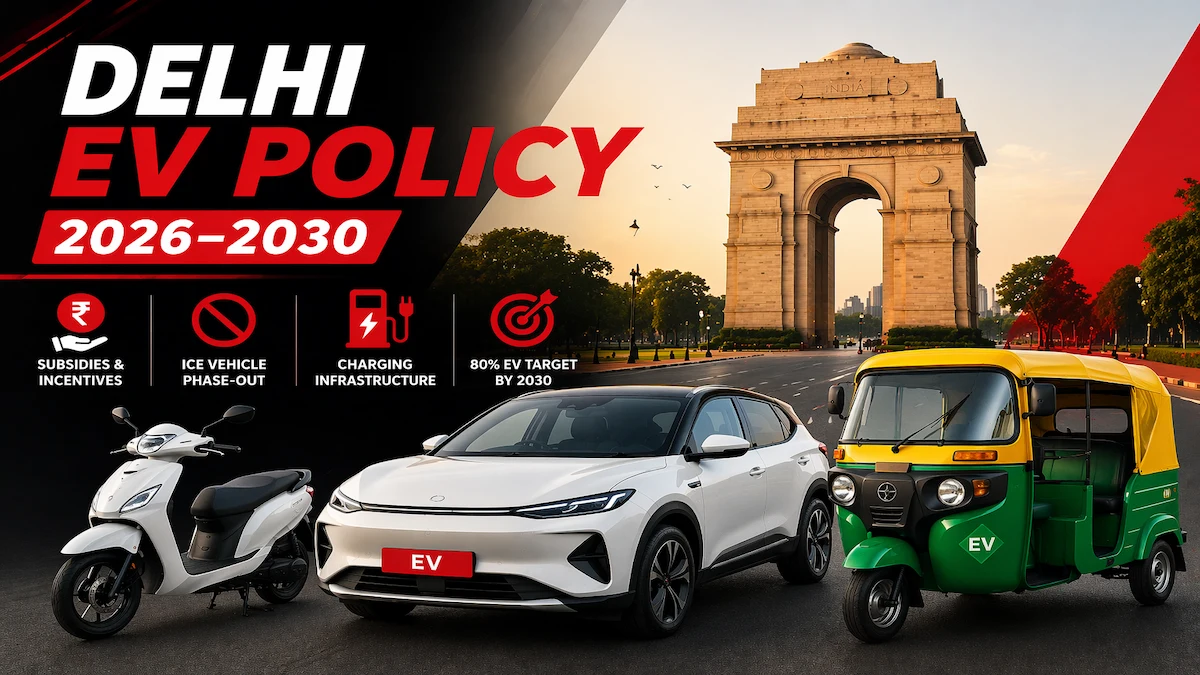
The upcoming Delhi EV Policy 2026–2030 marks a clear shift from encouraging electric vehicles to actively pushing the transition away from petrol, diesel, and even CNG vehicles. While the earlier policy focused on incentives and early adoption, this new phase is designed to accelerate mass adoption through a mix of benefits and restrictions. The target is ambitious—up to 80 percent of new vehicle registrations being electric by 2030—making Delhi one of the most aggressive EV markets in India.
What stands out in this policy is the strategy. Instead of banning all petrol and diesel vehicles overnight, the government is targeting high-usage and high-pollution segments first, especially commercial vehicles and public transport. This makes the transition more practical while still achieving strong emission reduction goals.
The biggest impact will be seen in the commercial segment. From 2026, new CNG auto registrations are likely to be restricted, and by 2027, delivery fleets such as e-commerce and logistics companies will be required to switch to electric vehicles. Between 2028 and 2030, petrol and diesel commercial vehicles—especially those used for last-mile delivery—will be phased out aggressively. This segment is expected to transition the fastest because it directly impacts urban pollution levels.
Government vehicles will also lead by example. From 2026 onward, no new petrol or diesel vehicles will be purchased for government use. Public transport, including buses, will increasingly shift to electric options, with a near-complete transition expected by 2030.
For two-wheeler buyers, the shift will be gradual but significant. Petrol scooters and bikes are not expected to be banned immediately, but restrictions on new registrations could begin around 2027–2028. Combined with subsidies for electric scooters and rising fuel costs, this will naturally push buyers toward EVs. By 2030, electric two-wheelers are expected to dominate new sales in Delhi.
Private car buyers will see a slower transition compared to commercial segments. There is no immediate ban on petrol or diesel cars, but policy pressure will increase over time. This could include higher taxes, stricter registration norms for diesel vehicles, and reduced incentives compared to EVs. By the end of the decade, electric cars are expected to become the preferred choice, not because of a direct ban but due to economic and regulatory advantages.
Existing rules on older vehicles will continue to play a key role. Diesel vehicles older than 10 years and petrol vehicles older than 15 years are already banned in Delhi, and enforcement is expected to become stricter under the new policy. Scrappage incentives may further encourage owners to shift to electric vehicles.
Another major development is the possible introduction of low-emission zones. In these areas, petrol and diesel vehicles could face entry restrictions, effectively making EVs the only convenient option in certain parts of the city. This could be a game changer for urban mobility, especially in high-traffic zones.
To support this large-scale transition, the government will continue offering financial incentives. These include purchase subsidies, tax exemptions, and benefits for scrapping old vehicles. However, subsidies are likely to become more targeted rather than universal. At the same time, charging infrastructure will expand rapidly, with more public charging stations, better coverage across the city, and a strong push for fast charging and battery swapping solutions.
Battery swapping, in particular, is expected to play a crucial role for delivery riders, e-rickshaws, and fleet operators, as it reduces downtime and improves efficiency.
In terms of timeline, the transition begins in 2026 with restrictions on government and commercial ICE vehicles. By 2027, fleet electrification will accelerate, followed by a sharp decline in petrol two-wheelers and commercial ICE vehicles around 2028. By 2030, Delhi is expected to achieve majority EV adoption, with petrol and diesel vehicles becoming increasingly impractical for new buyers.
For consumers, the message is clear. Petrol and diesel vehicles will not disappear overnight, but they will gradually lose their advantage. Electric vehicles, on the other hand, will become more affordable, easier to own, and more practical with improved infrastructure.
For businesses, especially in logistics and delivery, the shift to EVs will no longer be optional. It will be driven by both policy requirements and cost savings in the long run.
Also Read: Best Electric Cars Under ₹15 Lakh in Delhi (2026): Top Budget EVs with Price, Range & Features
The Delhi EV Policy 2026–2030 is less about banning vehicles and more about changing the market itself. By combining incentives with restrictions, the government is ensuring that electric vehicles become the default choice over time.
If you are planning to buy a vehicle in Delhi, the decision is becoming increasingly straightforward. Petrol and diesel may still work in the short term, but electric is clearly the future—and this policy is designed to make that transition inevitable.
For more refined automotive insights and detailed updates, visit CarVoxa.com
FAQs
-
What is the target of Delhi EV Policy 2026–2030?
The policy aims to achieve up to 80 percent electric vehicle adoption in new registrations by 2030.
-
Will petrol and diesel cars be banned in Delhi?
There is no immediate complete ban on private petrol and diesel cars. However, restrictions and higher costs will gradually reduce their usage.
-
From when will EV rules start in Delhi?
Major changes are expected to begin from 2026, with stricter implementation between 2027 and 2030.
-
Will petrol two-wheelers be banned in Delhi?
Petrol two-wheelers are not expected to be banned immediately, but restrictions on new registrations may begin around 2027–2028.
-
What happens to old petrol and diesel vehicles?
Diesel vehicles older than 10 years and petrol vehicles older than 15 years are already banned and this rule will continue.